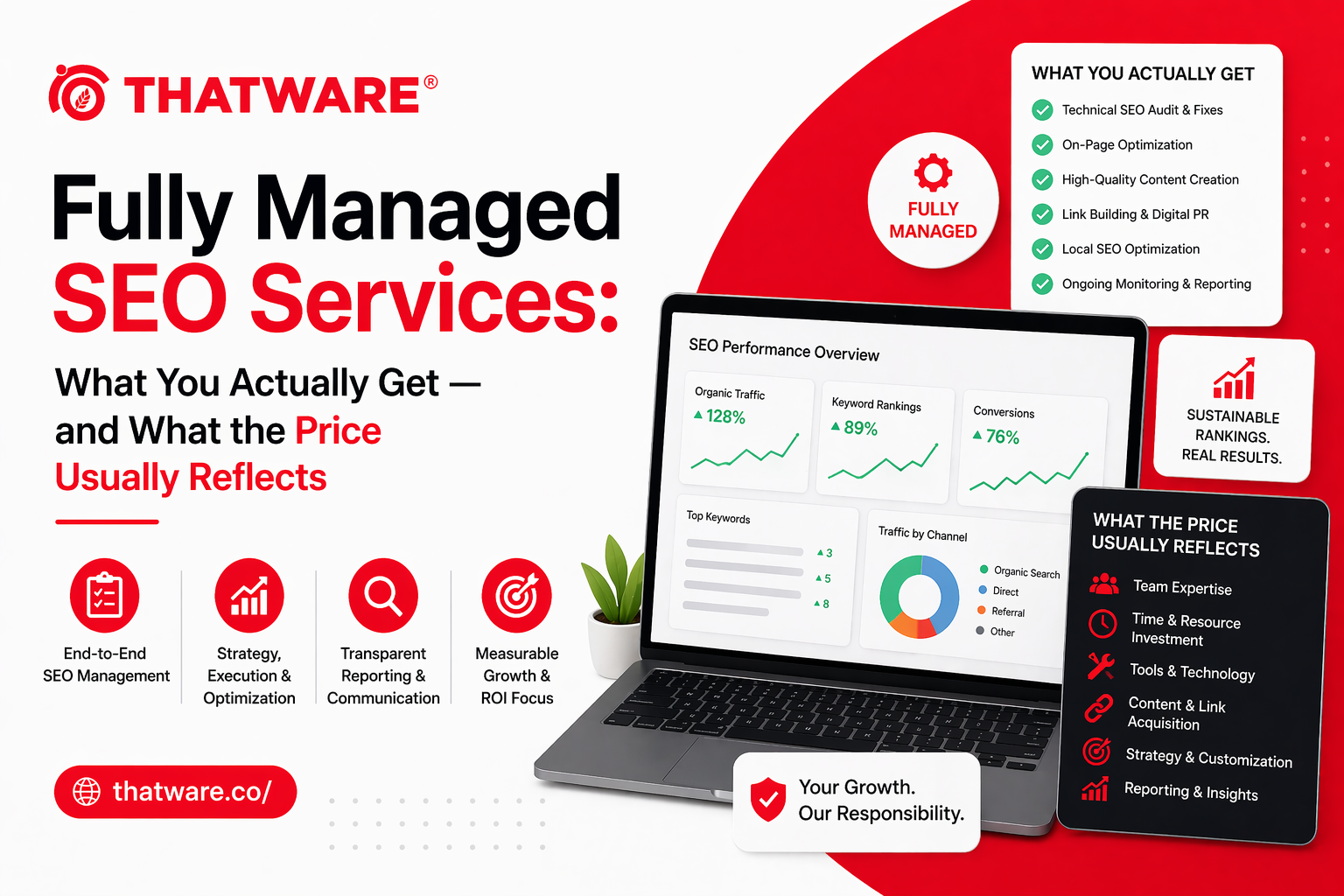
“Fully managed SEO” is one of those terms that can mean almost anything depending on who’s saying it. For some agencies, it means a monthly retainer where they run a checklist and send you a report. For others, it means a genuine strategic partnership where experienced people are making ongoing decisions about your organic search presence and are accountable for real outcomes.
The price difference between these two versions of “fully managed” can be substantial. Understanding what you’re actually buying – and what the price structure usually reflects – helps you make better decisions about your SEO investment.
What “Managed” Should Actually Mean
The core value proposition of fully managed SEO is that you’re not doing the work yourself. You’re not deciding which technical issues to prioritize, you’re not creating the content briefs, you’re not doing the outreach for links, you’re not interpreting the analytics. A team with SEO expertise is doing all of that, and you’re overseeing the outcomes.
What separates genuinely managed SEO from a retainer where an agency runs a repeating process is strategic ownership. In a genuinely managed engagement, the agency is making proactive strategic decisions – not waiting for you to tell them what to focus on. They identify opportunities, flag risks, shift priorities based on what the data is showing, and adapt to algorithm changes without being prompted.
What’s Typically Included
Fully managed seo services from a reputable provider typically include ongoing technical SEO maintenance and improvement – regular audits, issue resolution, structured data management, site speed monitoring. Content strategy and production – identifying topical opportunities, creating content briefs or producing content directly. Authority building – digital PR, link outreach, brand mention monitoring. Analytics and reporting – performance tracking, attribution, regular strategic reviews. And search landscape monitoring – keeping track of algorithm updates, competitor movements, and emerging opportunities.
The depth of each component varies with the engagement level. A lower-tier managed engagement might handle technical basics and a limited content production volume. A higher-tier engagement includes more strategic depth, more content output, more proactive authority building, and more senior strategic oversight.
What Price Usually Reflects
Cheap fully managed SEO is almost always under-resourced in one of a few ways: junior staff doing the work, inadequate content production volume, link building that relies on tactics that are risky or low-quality, or thin reporting that doesn’t connect activity to outcomes.
The economics are straightforward. Effective SEO requires skilled people spending meaningful time on your account. Skilled SEO people have market salaries. If the price doesn’t support those salaries, someone is cutting corners somewhere. The question is where.
managed seo services at the higher price points – when the agency is genuinely delivering – reflect senior strategist time, content production at real editorial standards, legitimate authority building through meaningful outreach, and reporting infrastructure that actually measures what matters. That’s the cost structure of doing it properly.
The Accountability Question
One thing that separates better managed SEO engagements from worse ones is accountability for outcomes. Good agencies define, track, and take ownership of meaningful metrics – organic traffic trends, keyword visibility, lead attribution from organic, revenue influence. They set realistic expectations at the start of an engagement and they have honest conversations when those expectations aren’t being met.
Agencies that focus reporting on activity metrics – we published X articles, we built Y links – rather than outcome metrics are often protecting themselves from accountability by keeping your attention on things they control rather than things that matter to your business.
Ask prospective agencies: what metrics will you hold yourselves accountable to, and what’s a realistic timeline for meaningful movement on those metrics given our current state? The quality of that answer tells you a lot.
When Fully Managed Makes Sense
Fully managed SEO is most clearly the right model for businesses where: internal marketing teams don’t have SEO expertise, the complexity of SEO requirements exceeds what internal resources can manage, or the value of SEO performance is high enough to justify the investment in external expertise.
For businesses with capable in-house SEO teams, a more collaborative model – where the agency provides specialized support and strategy input rather than full execution – may be more cost-effective. The right model depends on internal capability, not on a blanket preference for managed vs. in-house.
Red Flags to Avoid
A few things that should make you cautious about a “fully managed” offer: very low pricing that doesn’t support the staffing economics of real work, vague deliverables that don’t specify what actually gets produced, guaranteed ranking promises (no legitimate agency guarantees specific rankings), and reporting that focuses entirely on rankings without connecting to business outcomes.
The managed SEO market has genuine quality variance. The due diligence investment of evaluating multiple options carefully before committing almost always pays off.