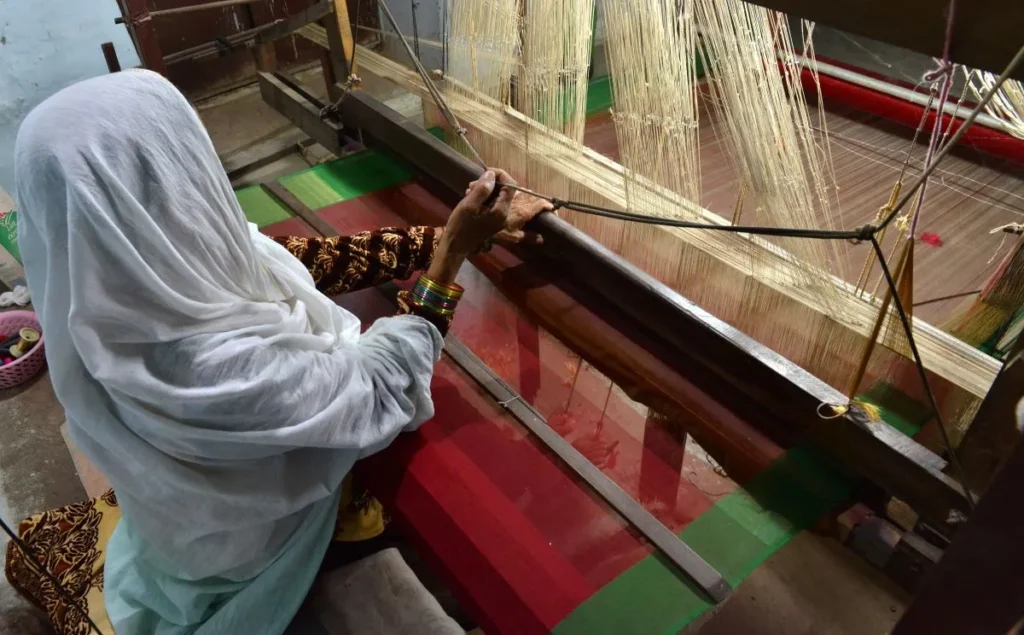
Chanderi and Maheshwari sarees are frequently mentioned in the same breath, both hailing from Madhya Pradesh, both prized for their sheer, lightweight texture, and both often confused for one another by buyers who have not seen the two side by side. Yet the weaving traditions behind them, and the finished fabric they produce, are meaningfully different once you know what to look for.
Two regions, two philosophies of weaving
Chanderi, woven in the town of the same name, is known for its almost translucent quality, achieved by using very fine yarn and a distinct weaving technique that leaves the fabric with a glossy, slightly transparent finish. Maheshwari, woven along the banks of the Narmada in Maheshwar, tends to be somewhat sturdier and more opaque, with a structured drape that holds its shape a little more firmly through the day. Related context: Modern Tips for Safe and Discreet Everyday Carry.
Both traditions date back centuries and were historically patronised by royal courts, which is part of why zari work and fine detailing remain central to both weaves even today.
The role of zari and the checkerboard motif
Maheshwari sarees are particularly recognisable for their checkerboard, or ‘chatai’, pattern along the border, along with distinctive reversible borders that were traditionally designed so both sides of the saree could be worn. Chanderi, by contrast, leans more heavily on delicate motifs like the coin, or ‘buti’, scattered across the body of the fabric, alongside real or tested zari borders.
Why sheerness is a feature, not a flaw
First-time buyers sometimes mistake the sheer quality of Chanderi for a lower quality fabric, when in fact it is the entire point of the weave. The fine yarn and open weave are what allow the fabric to feel almost weightless while still holding a crisp drape, making it especially suited to warm weather dressing without sacrificing an elegant finish. Related context: Giving Your Home a Fresh Start: What to Know Before You Remodel.
How to tell a handwoven piece from a power-loom imitation
Genuine handloom Chanderi and Maheshwari will show small, natural irregularities in the weave when examined closely, something a machine-woven imitation almost never has. The zari on an authentic piece tends to feel slightly textured rather than perfectly flat, and the reverse side of the fabric usually mirrors the front closely, since handloom weaving does not rely on the same layering techniques as powerloom production. Asking a seller directly about the weaving region and requesting a close-up photograph of the border before buying online is a simple way to avoid an imitation.
Buyers looking to compare authentic pieces directly can browse handwoven Chanderi sarees and Maheshwari weaves side by side, which makes the difference in texture and drape between the two traditions much easier to spot than trying to judge from a single photograph.
Caring for the weave’s structure
Because both fabrics rely on fine, closely set yarn, avoiding rough handling during washing is especially important. A gentle hand wash or dry clean, combined with flat storage away from sharp folds, keeps the delicate weave from developing snags or thinning at stress points over time. Related context: Fully Managed SEO Services: What You Actually Get – and What the Price Usually Reflects.
Conclusion
Chanderi and Maheshwari sarees are often shopped for interchangeably, but understanding what sets each weaving tradition apart makes it far easier to choose the right piece for a given occasion, and to recognise genuine handloom craftsmanship when you see it.